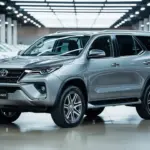
Volkswagen Virtus 2026 targets a renewed sedan audience
Volkswagen’s Virtus is being positioned as part of a wider push to keep sedans relevant in a market increasingly dominated by SUVs. The 2026 version, as described in early reports and industry chatter, leans on two traditional sedan strengths—on-road performance and fuel efficiency—to stay competitive.
While official, market-specific specifications can vary, the core message around the Virtus 2026 centers on turbo-petrol power and an efficiency figure being quoted at up to 19 kmpl.
Turbo performance remains the key talking point
The Virtus lineup has been known for offering turbocharged petrol options, and that approach appears set to continue for 2026. Turbo engines typically appeal to drivers looking for stronger mid-range acceleration for city overtakes and highway cruising, without stepping into higher-displacement motors.
In practical terms, the “turbo performance” pitch suggests Volkswagen is aiming to keep the Virtus feeling lively and responsive, which is often a deciding factor for buyers who still prefer sedans for their driving dynamics.
19 kmpl mileage claim adds an efficiency angle
The mileage figure being discussed—up to 19 kmpl—puts the focus on running costs, an area where many buyers weigh sedans against compact SUVs. If achieved in real-world conditions close to this number, it could help the Virtus appeal to commuters and frequent highway users.
However, mileage results depend heavily on driving style, traffic conditions, tyre pressure, fuel quality, and whether the figure is based on a test cycle or on-road usage.
Why the Virtus 2026 matters in the current market
With SUVs taking up more showroom space, sedans are increasingly expected to justify their place with clear advantages. For the Virtus 2026, the combination of turbocharged power delivery and a high claimed fuel-efficiency figure is being used to make that case.
For buyers, the bigger question may be value—how the Virtus is priced and equipped versus similarly priced crossovers, and whether it continues to offer a driving experience that feels distinct from taller-bodied alternatives.

What buyers will likely watch for next
As more details emerge, prospective customers will look for confirmation on power and torque figures, gearbox options, real-world mileage reports, and any feature updates. Safety equipment, infotainment upgrades, and variant-wise pricing will also shape how strongly the Virtus 2026 can compete.
Until full specifications are formally confirmed, the Virtus 2026 story is largely about positioning: a sedan presenting itself as both engaging to drive and economical to run.
FAQs
1) What is the claimed mileage of the Volkswagen Virtus 2026?
Reports cite a claim of up to 19 kmpl, though actual results can vary by conditions and driving style.
2) Is the Virtus 2026 expected to have a turbo engine?
Yes, turbo performance is a key part of the messaging, indicating turbo-petrol options are expected to continue.
3) Will the Virtus 2026 mileage be the same in city traffic?
Typically not. City mileage is usually lower due to stop-and-go traffic, while highway cruising can return better figures.
4) Why is Volkswagen emphasizing turbo performance and efficiency?
These are two areas where sedans can stand out against many SUVs—stronger driving dynamics and potentially lower running costs.