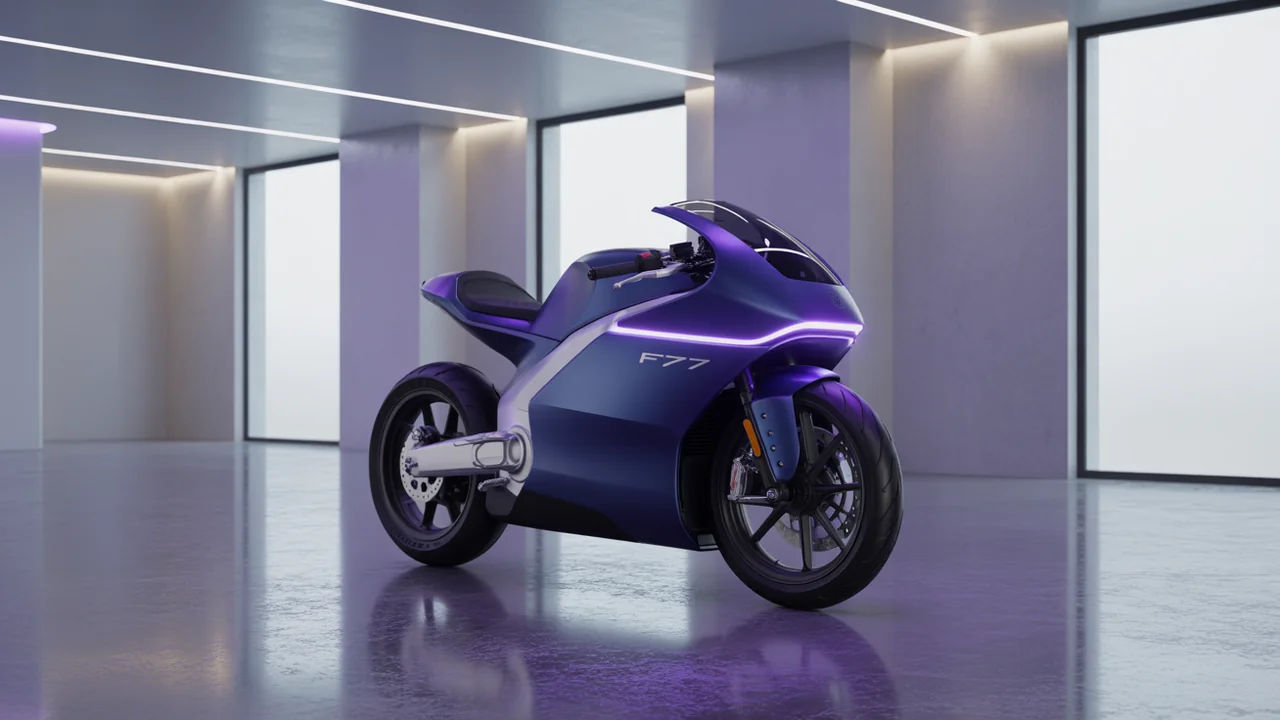
Ultraviolette F77 2026 draws attention across India
The Ultraviolette F77 2026 is prompting fresh interest in the electric two-wheeler space, with riders and industry watchers focusing on its performance-led positioning and a claimed range figure that reaches 307 km. The model has been discussed widely in recent weeks as electric motorcycles continue to move beyond city-commuter expectations.
Ultraviolette, an India-based EV manufacturer, has aimed the F77 line at customers who want stronger acceleration and higher-speed capability compared with many mainstream electric scooters. The 2026 update is being viewed as another step in that direction.
Range claim: up to 307 km
The headline number attached to the F77 2026 is a claimed 307 km range. As with any EV, real-world distance can vary depending on riding style, traffic conditions, speed, payload, road surface, tyre pressure, and temperature.
Buyers typically look for clarity on test cycles, average speeds, and whether figures reflect ideal conditions. Many riders also compare claimed numbers with independent reports and day-to-day commuting patterns before making a decision.
Performance focus shapes the conversation
Unlike EVs designed primarily for short urban runs, the F77 is often framed around stronger performance and highway-capable dynamics. That approach has helped it stand out in a market where many electric offerings prioritize convenience, storage, and low-speed efficiency.
For some riders, the appeal lies in the idea of an EV motorcycle that feels closer to a conventional sporty machine in terms of response and road presence, while still offering electric running costs and reduced tailpipe emissions.
Design and road presence
The F77’s styling continues to be a major talking point. It follows a sharp, futuristic design language that looks closer to a performance motorcycle than a typical commuter vehicle. That has contributed to the “turning heads” narrative in public discussions and social media sightings.
Design alone does not determine long-term ownership satisfaction, but it often influences showroom interest and early adoption, especially in a premium-leaning category.
Charging and day-to-day usability questions remain central
Range figures tend to dominate headlines, but many prospective owners also weigh charging access and routine practicality. Home charging availability, charging time, and public charging coverage can shape the ownership experience as much as the battery specification.
In larger cities, improving charging networks may reduce range anxiety, while smaller towns and intercity routes can still make planning important for riders who intend to travel longer distances.
Where it fits in the evolving EV two-wheeler market
The F77 2026 enters a market that is expanding quickly, with buyers increasingly segmenting electric two-wheelers into commuter, family, and performance categories. A performance-focused EV motorcycle is still a niche compared with mass-market scooters, but interest is growing.
How the model performs in long-term reliability, service reach, parts availability, and resale value will likely influence how widely this segment grows over the next few years.
FAQs
1) What is the claimed range of the Ultraviolette F77 2026?
The claimed range figure being discussed is up to 307 km, though real-world results can vary based on conditions and riding style.
2) Is the F77 2026 positioned as a commuter EV or a performance EV?
It is widely described as performance-focused, with an emphasis on sporty riding and stronger output compared with many commuter-oriented electric two-wheelers.
3) Will the F77 2026 deliver 307 km in everyday riding?
Not always. Actual range depends on factors such as speed, traffic, terrain, load, tyre pressure, and weather, so many riders may see lower figures in typical conditions.
4) What should buyers consider beyond range?
Key considerations include charging access and time, service network coverage, long-term battery performance, running costs, and how the bike fits daily travel needs.