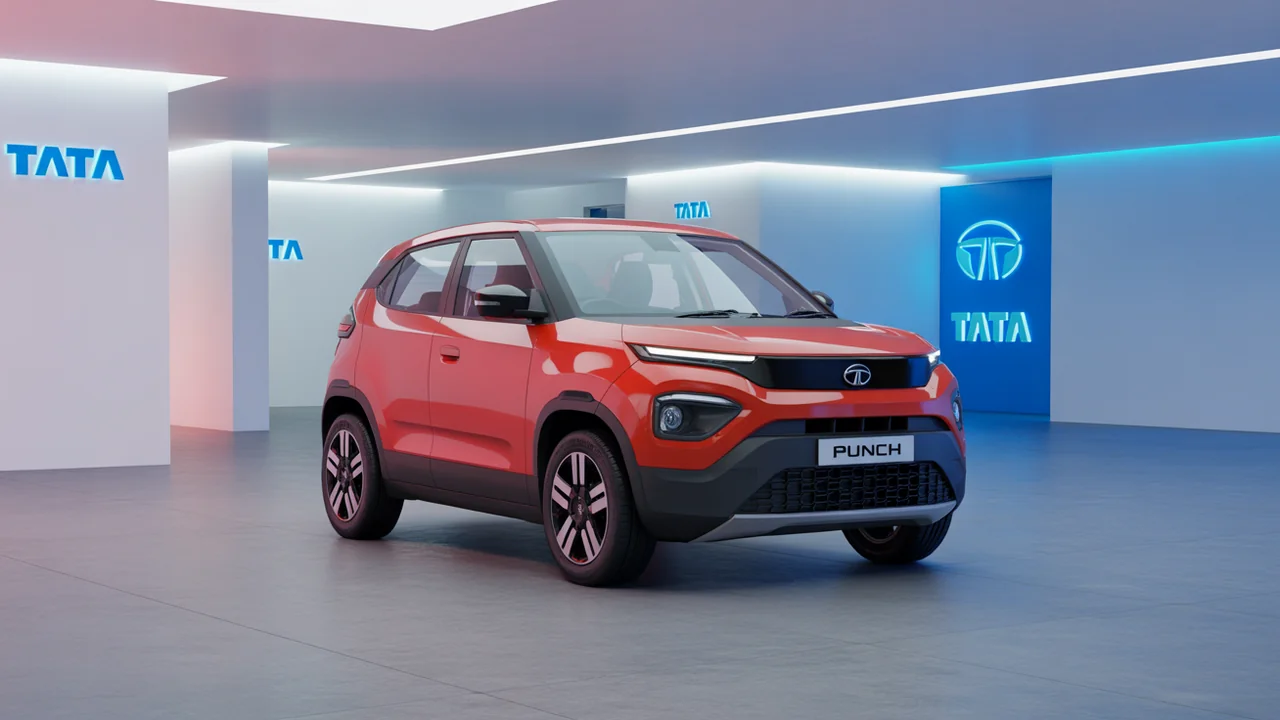
Rugged styling aims at everyday usability
Tata Motors is expected to keep the Punch’s familiar boxy shape for the 2026 model, but with sharper detailing that leans into the micro-SUV identity. The upright stance, chunky cladding, and higher-looking bonnet line continue to be the main cues, targeting buyers who want a tougher-looking small car for city and occasional rough-road use.
Design updates are likely to focus on bumpers, lighting signatures, and wheel designs rather than a full overhaul. The idea appears to be strengthening the Punch’s “rugged” image while keeping it practical for tight parking spaces and daily commutes.
Claimed 20 kmpl mileage in focus
Fuel efficiency is expected to be a key talking point for the Tata Punch 2026, with reports pointing to a mileage figure around 20 kmpl. If achieved in real-world conditions close to the claim, it would position the model well for cost-conscious buyers balancing SUV-like styling with running expenses.
Actual mileage typically varies based on driving style, traffic conditions, tyre pressure, and vehicle load. Buyers generally look at certified figures as a benchmark, then compare them with owner-reported results once the vehicle is on the road.
Micro-SUV segment remains competitive
The micro-SUV space in India continues to attract strong demand, largely because it blends hatchback-like dimensions with a raised seating position and tougher design. The Punch has been one of the familiar names in this bracket, and a 2026 refresh would be aimed at defending that position as rivals update features and styling.
Competition in this segment tends to be driven by a few key factors: mileage, feature value, cabin space, and perceived road presence. Small changes—like improved efficiency or added safety equipment—often influence buying decisions as much as major design revisions.
Cabin expectations: practical layout and updated tech
In this category, buyers typically expect a straightforward cabin with useful storage, decent rear-seat comfort, and features that match current expectations. The 2026 Punch is likely to continue prioritizing practicality, with potential updates to infotainment, connected features, and convenience additions depending on the variant lineup.
Safety remains a major consideration for many Punch shoppers as well. Any confirmed updates to standard or optional safety equipment would be closely watched, especially in a segment where buyers compare value across multiple trims.

Positioning: small footprint, SUV-like appeal
The Punch’s appeal has generally been tied to its compact footprint and higher stance, making it a common shortlist option for urban users who occasionally face poor roads or seasonal flooding. The 2026 direction, as indicated by the focus on rugged design and a 20 kmpl figure, suggests Tata is leaning into the same strengths rather than changing the formula.
More clarity on exact specifications, variant-wise features, and pricing will ultimately determine how strongly the Tata Punch 2026 can “strengthen” its standing in the micro-SUV segment.
FAQs
1) What is the reported mileage for the Tata Punch 2026?
It is being reported at around 20 kmpl, though final certified figures and real-world results can vary.
2) Is the Tata Punch 2026 a full redesign?
Current expectations point more toward an update or refresh, with design tweaks rather than a complete model change.
3) What type of buyer does the Punch 2026 target?
It mainly targets urban users who want a compact car with SUV-like styling, a higher seating position, and manageable running costs.
4) What details are still unconfirmed?
Final engine and transmission options, variant-wise features, safety equipment list, and pricing are typically confirmed closer to launch.